News · Chilliwack, British Columbia
Published
Why Chilliwack Can Face Drought Even When It Rains
Chilliwack’s main supply comes from the Sardis-Vedder Aquifer, replenished by the Vedder River and water soaking into the ground. A wet day is not a measurement of that supply. Check the city’s current notices for restrictions; the ordinary outdoor season runs May 1 to October 15.
Facts checked
In this story
The raincoat is not a groundwater gauge
Drought is an awkward word to encounter while looking for somewhere to dry a raincoat. In Chilliwack, the contrast feels particularly sharp: a place associated with rain can still have a serious conversation about water supply.
The explanation begins below the pavement. The Sardis-Vedder Aquifer is the city’s main drinking-water source. It is replenished by the Vedder River and by rain and snow that infiltrate the ground. What matters to the supply is not simply whether it rained during your last journey, but how water reaches and remains in that system.
A puddle is evidence of a wet surface. It is not a reading of a well. Once those two observations are separated, the apparent contradiction becomes much easier to understand.
Source: City of Chilliwack: aquifer and water conservation stage triggers
Supply and demand need the longer view
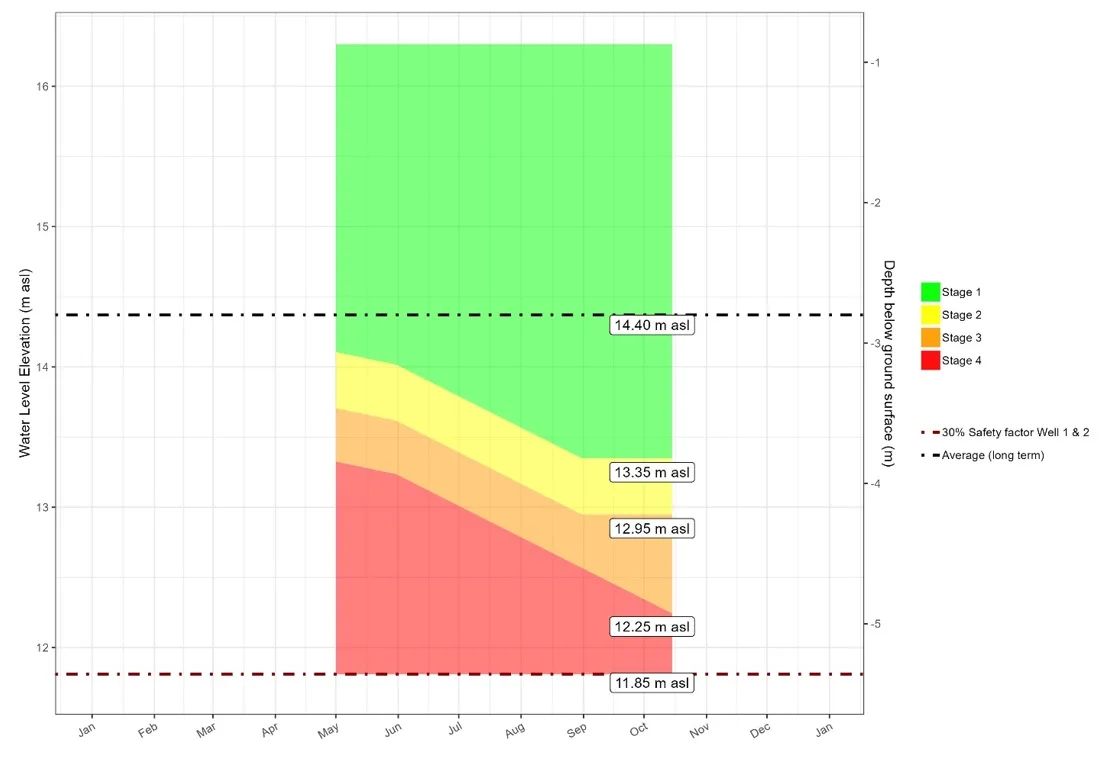
An aquifer stores water underground. The city draws on that supply through wells, and its water-conservation triggers consider groundwater information and the amount the wells can safely draw down.
Drawdown describes the lowering of the water level as water is pumped. It is useful because a supply system has to account for what people remove as well as what arrives. The city reviewed its conservation triggers in 2023 using well and historical groundwater information.
That makes a longer period of dry conditions relevant even when rain returns. It also explains why demand matters. A wet afternoon does not immediately establish that the stored supply, inflow and rate of use have returned to a comfortable balance.
Source: City of Chilliwack: aquifer and water conservation stage triggers
Several kinds of wet can happen at once
A flooded basement, an overflowing ditch and a dry garden describe real conditions, but they do not measure the same thing. Surface drainage, soil moisture and groundwater supply need different information.
Local accounts of unusually dry winters and damaging wet weather can therefore coexist without one proving the other imaginary. A particular property can have a drainage problem while a wider water system still needs conservation. A household observation is useful local information, but it is not the complete record.
The same care applies to explanations of weather patterns. Rainfall impressions cannot by themselves establish a long-term climate trend, and an unverified account of atmospheric circulation should not become a local forecast. For the drinking-water question, the city’s actual supply measurements are the more useful starting point.
Source: City of Chilliwack: aquifer and water conservation stage triggers
Source: Residents discuss precipitation and local differences, January 2025
Source: Drought discussion in Chilliwack, November 2, 2026
What that means for a household
First, distinguish a concern about supply from a new restriction notice. Chilliwack’s regular outdoor watering season runs from May 1 to October 15. That does not mean an additional notice cannot apply, but a November discussion of drought is not itself a newly announced watering ban.
Use the city’s current water-conservation information for the actual rules and practical steps. Reducing avoidable use, noticing a leak and choosing a less wasteful routine do not become pointless because the sprinkler season has ended.
Choose a change you can sustain rather than treating conservation as a short emergency performance. A household that finds and resolves an ongoing leak may achieve more than a burst of conspicuous effort followed by a return to the same problem.
Source: City of Chilliwack: water conservation
Source: City of Chilliwack: seasonal watering restrictions
A shared supply deserves clear information
Nothing in a wet-day contradiction establishes that Chilliwack is about to run out of drinking water. Nor does a single tree’s condition prove one particular cause. The useful conclusion is that supply should be understood through the relevant evidence, not the view from one window.
Keep the city’s current notices close to the practical decision. If restrictions change, use the terms that apply now. If the question is why conservation remains relevant, remember where the water comes from and how long the system has to balance use with replenishment.
Rain is welcome. Understanding where it goes is better than asking a damp coat to settle the whole matter.
Source: City of Chilliwack: aquifer and water conservation stage triggers
Source: City of Chilliwack: water conservation
Source: Drought discussion in Chilliwack, November 2, 2026
Questions people ask
Where does Chilliwack get most of its drinking water?
The city identifies the Sardis-Vedder Aquifer as its main supply.
Source: City of Chilliwack: aquifer and water conservation stage triggers
What replenishes the aquifer?
The Vedder River, plus rain and snow soaking into the ground.
Source: City of Chilliwack: aquifer and water conservation stage triggers
Does rain immediately prove the wells are replenished?
No. Surface rain is not the same measurement as groundwater levels or well drawdown.
Source: City of Chilliwack: aquifer and water conservation stage triggers
What is groundwater drawdown?
The reduction in water level associated with pumping from the groundwater supply.
Source: City of Chilliwack: aquifer and water conservation stage triggers
How does demand affect the supply question?
The system needs to balance water removed through use with its stored supply and replenishment.
Source: City of Chilliwack: aquifer and water conservation stage triggers
When were conservation triggers reviewed?
The city records a 2023 review using safe well drawdowns and historical groundwater information.
Source: City of Chilliwack: aquifer and water conservation stage triggers
When is the usual outdoor watering restriction season?
May 1 to October 15. Check for current additional notices.
Source: City of Chilliwack: seasonal watering restrictions
Does dry weather automatically mean a new watering ban?
No. Use the City’s current watering notice to establish which restrictions apply, rather than inferring a ban from dry weather alone.
Source: City of Chilliwack: water conservation
Can surface flooding and supply concerns coexist?
Yes. Surface drainage and the state of groundwater supply are different questions.
Source: City of Chilliwack: aquifer and water conservation stage triggers
Where should I look for household water-saving guidance?
Use the City of Chilliwack’s water-conservation page and current notices.
Something changed? Tell us about a correction.